
Love is more than just the way you feel.
Dating & Relationships
Am I ready to date? Before you decide you’re ready to date or be in a relationship, ask yourself a few questions:
What do I want in a partner? What values do I find most important?
What are my expectations of a relationship? Are they healthy? Can I fulfill them myself?
Do I have time and energy to commit to a relationship?
Do I know what healthy boundaries look like? When do I share them with my partner?
Don’t stop there! Make sure you know about boundaries and consent, how to recognize healthy (and unhealthy) relationships and what to do if it’s not working out.



Upcoming Events
I Am Here To Help
Supporting A Friend
What to know
It’s important to remember that someone in an abusive situation will often feel trapped and powerless. The way we show up to support them matters. If you have never had to support someone in an abusive situation it can be a common thought to wonder “why don’t they just leave?”. The answer is it just isn’t that easy. It’s not easy to end any relationship let alone one that is full of threats, intimidation and fear.
If you are trying to offer support to someone and you just aren’t sure what to call our helpline at 317-745-1496 to talk with someone who can help you help them.
What to do
The most important thing we can do is to support them and not judge them. As a friend you also have to remember we cannot force them to end a relationship they are not ready to end, support them whether they choose to break up or stay with their partner.
Here are some tips for supporting a friend
-
-
- Be supportive, listen and believe them. Let them know that you are concerned for their safety and are available to help however they need it.
- Honor their decisions even if it isn’t what you don’t agree. Helping to empower them will go much further than telling them what to do.
- Remind them that the abuse is never their fault, no one deserves to be abused.
- Help them create a safety plan (link to the safety plan). Find out how they want you to respond in the middle of crisis or if things escalate. Offer to create a safe word that indicates they need yo
- 3ur help or need you to respond.
- Be consistent with communication and check-in’s
- Document as much as you can even if you think it isn’t serious or obvious. Remember abuse is more than bruises and marks.
-
I am friends with the abuser
There is a chance that you might be friends with the person who is abusing your friend. It is important to remember that someone who is abusive can change, but only if they choose to.
A few things to remember when engaging with someone who is abusive:
-
-
- Your silence about their behavior will only encourage it more.
- They may try to justify their behaviors to you or want your help justifying it. Do not support these behaviors.
- They may not receive it well, but you can encourage healthier behaviors and call out the unhealthy ones you see.
- Emphasize that it is never ok to use violence to get their partner to do what they want.
- Remember often times abusive people don’t realize they are abusive.
-
Supporting Your Child
Helping them navigate relationships
Parents are the #1 go-to for teens who have questions about relationships. It’s true! So, how do you be an approachable parent or other adult who shows they care?
-
-
- When a teen wants to talk, listen.
They’ll come to you when you’re busy, of course. Reassure them you’re interested and want to give them your full attention ASAP. Then follow through! - Take them seriously.
Their question or concern isn’t “nothing,” “a phase” or funny to them, so consider it as important as they do. - Hold your judgments and solutions.
Your first job is to help your child feel safe, cared for and listened to. - Keep your anger to yourself.
Of course, we’re going to be angry if someone hurts our kids, but that’s not what they need to feel from you right now. Don’t get mad, and don’t blame them for what’s happened or for not telling you sooner. - Remember (and tell them) you love them.
Their happiness is your #1 goal. Especially when they’re in emotional pain, they need all the sincerely positive emotions they can get from you.
- When a teen wants to talk, listen.
-
How can I get my teen to talk?
Conversation starters – In the car, watching TV, emptying the dishwasher … Teens are most approachable in a casual atmosphere. Try these conversation starters:
-
-
- Is being in a relationship important to you? What about it is appealing?
- What do you think makes a relationship healthy?
- What are some of the signs that indicate a relationship might be unhealthy?
- Have you seen any of those signs with your friends or in your own relationships? What would you do if you did?
- How does texting work among your friends? How do you feel if someone doesn’t respond right away or texts you a lot?
- Do you feel like couples need to share passwords and tell each other where they are all the time? Can it show trust not to expect this?
-
Most importantly, don’t wait until you think something is wrong to start a conversation. Keep the lines of communication open at all times. They may not want to talk often, but when they do, you want to make it as easy as possible!
Your Teen Could Be in an Abusive Situation if They:
-
-
- Tell you they’re being harassed or abused. Believe them!
- Have a partner who is extremely jealous or possessive.
- Seem afraid of what their partner will do if they make them angry,
- Always need to report their location to their partner.
- Repeatedly have things “accidentally” damaged or lost by their partner.
- Act afraid to change or break up the relationship.
- Stop spending time with anyone else.
- Always make excuses for their partner’s behavior.
- Drop out of sports, clubs, hobbies, friend groups, etc.
- Have bruises or marks outside the norm.
- Tell you their partner has shoved, slapped, hit or called them names.
-
What to do if it is abusive:
-
-
- Take your suspicions or their concerns seriously. By supporting your teen, you’ll show they can trust you. Document everything you see and hear that indicates possible abuse.
- Tell them it’s not their fault, you’re on their side, and you’re concerned about their safety.
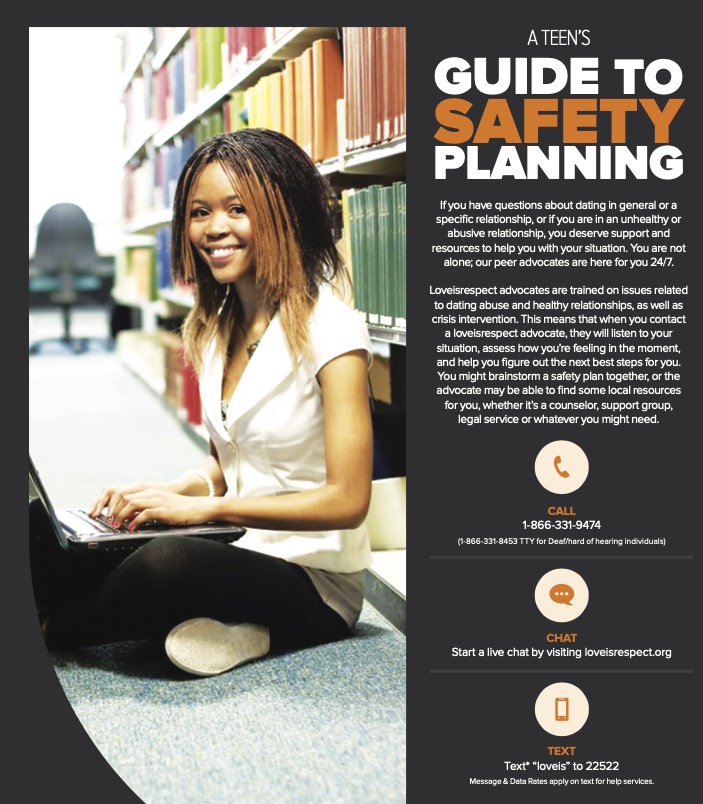
- Help them create a safety plan, especially if they want to end the relationship.
- Contact your local prosecutor’s office to talk about a protective order if you’re unsure about needing one.
- Safety plan
-
Supporting A Student
What to know
If you are an educator or administrator in a school that receives federal funding there are certain requirements under Title IX to report abusive situations, this includes dating violence, domestic violence and stalking. Your support of victims is imperative to ending abuse. You may want to find out if your school has a student policy for reporting abuse, if they don’t consider reaching out to us to find out how you can support students by advocating for such a policy.
What to do
Students may reach out to a teacher they trust or you may see some signs that your student is in an abusive situation.
Because you might be required to report the abuse remember these things:
-
-
- Understand your requirements in your role
- Make the student aware of your responsibilities if they disclose
- Remind them the abuse is not their fault
- Encourage them to talk to their parents
- Help them to remain safe while they are at school
-
School resources
In any situation feel free to call our helpline at 317-745-1496 and we can help you support your students in this situation. Your guidance counselors and school safety officers can offer additional resources or you can find them here (we will link to our resource page)
Teens That Talk Youth Council
What is the Youth Council?
To raise awareness about and prevent teen dating violence by providing education, sharing resources, and encouraging others to speak up about abuse.
– Romans 13:10a “Love does no wrong to others.”
Teens That Talk has been preventing teen dating violence since 2013.
Since 2013, members of Teens That Talk have been talking to other young people about what dating violence is, where teens can get real information about relationships and how they can help each other.
These local high school students visit schools and events, hold fundraisers, conduct social media campaigns, volunteer for organizations and more because:
- 1 in 3 teens will experience some form of verbal, emotional, physical or sexual abuse from a dating partner.
- 1 in 10 high schoolers has been hit, slapped or physically hurt on purpose by a boyfriend or girlfriend.
- More than half (52%) of teens who experience digital abuse also get physically abused.
They’re people just like who you care. Will you join them or be your school’s ambassador? Call Melissa Echerd at (317) 386-5061, email her at [email protected] or complete the form below.
Teens That Talk Youth Council
Join the Youth Council
Teens That Talk meets on the second Tuesday of every month from 6:30-8:00pm at Sheltering Wings. We know that you have lots of options on how to spend your spare time and understand that you are busy and involved in other things. We you to be a part of preventing abuse even if that means you can’t make every meeting
I’d like to learn more about joining Teens That Talk or becoming an ambassador for my school!